Paper Summary: The State-Prediction Separation Hypothesis
Copied verbatim from my Twitter thread (26 July 2026).
"The State-Prediction Separation Hypothesis"
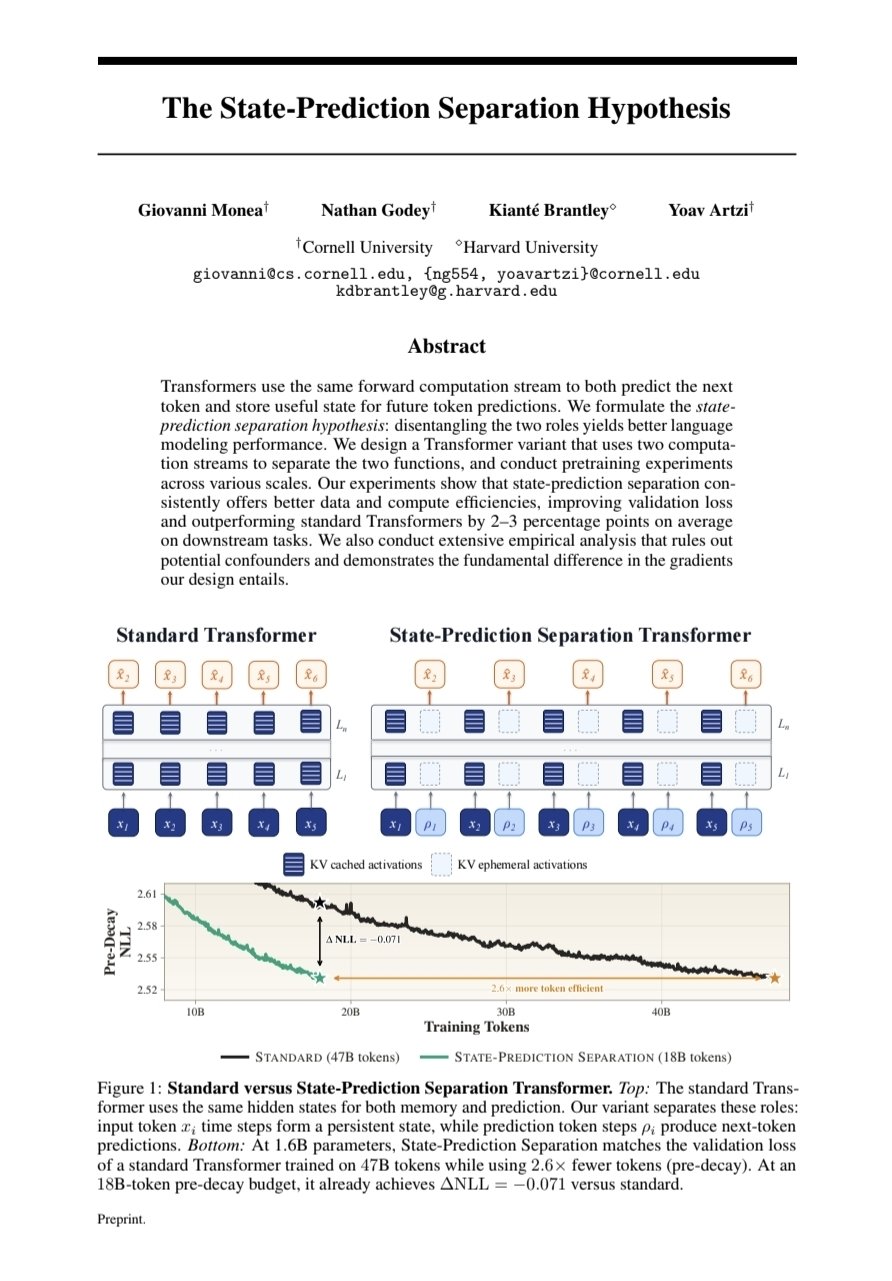
Authors here note that complex LLMs are not just doing next-token prediction, but also maintaining an internal state.
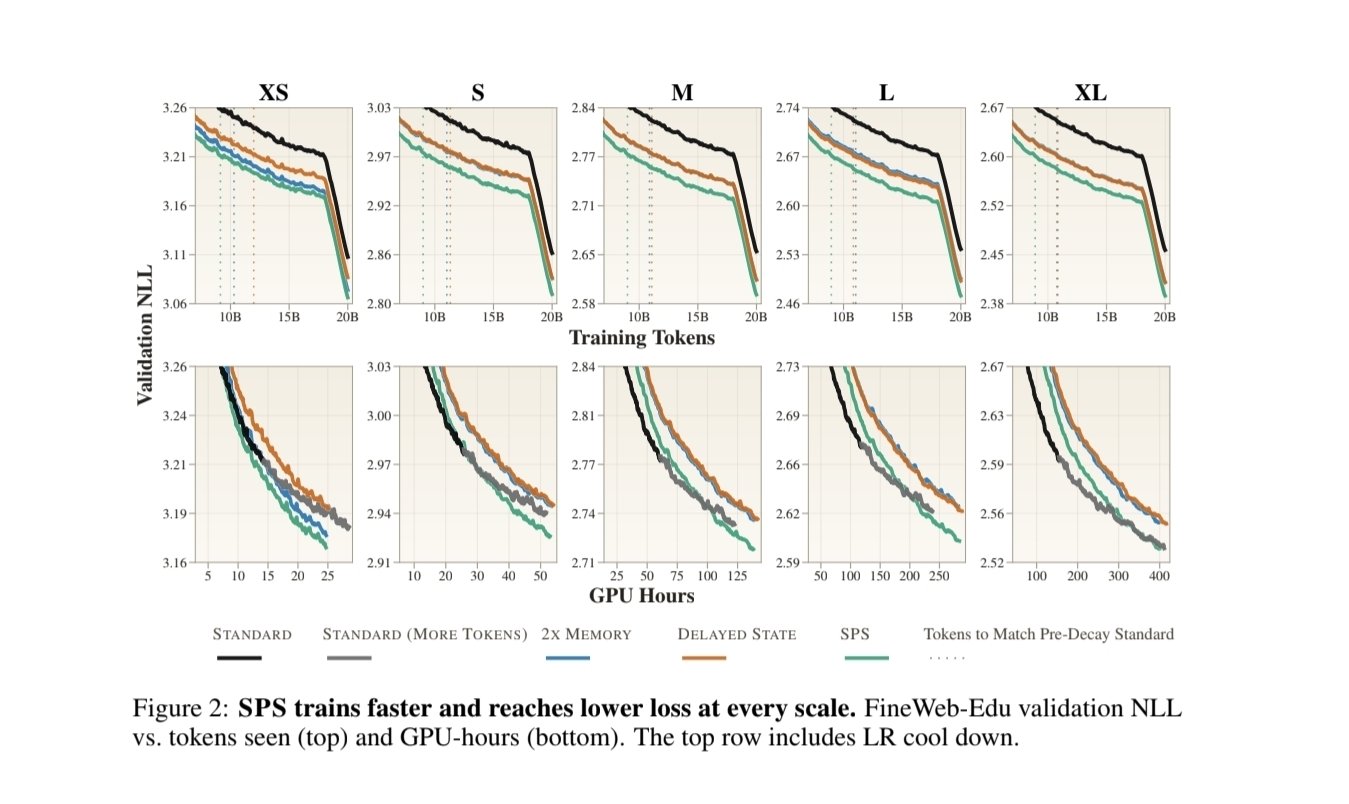
They find by explicitly separating these functions (simple masking) they can get same performance for cheaper!
Full paper here:
https://arxiv.org/abs/2607.01218
Masking mechanism is simple:
Every token gets a parallel "predict token" inserted with it.
A sliding window includes the last K predict tokens, along with the usual full history of real tokens.
Next token prediction is only done on the predict tokens.
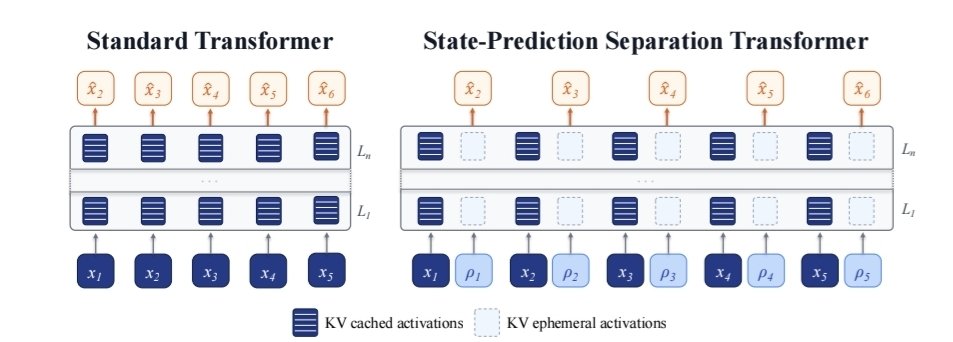
There's an inverse way of looking at this: at every token, the model gets a "thinking token".
This is the opposite end to having all the "chain of thought" at the end of the input but before the output.
An interesting followup idea is: can we get the same result with having thinking space every N tokens? (The algorithm here would need nontrivial adjustments). In some ways, this could look very similar to the Token Superposition paper.
(Token superposition paper:)
N.B. the headline picture of "2.6x more token efficient" is taken from *before* learning rate decay phase (linear decay at the last 10% of steps).
There is also a small ~7% inference cost, at least in their implementation
Results are still a good and significant gain!
Beyond the paper: in the age of Reinforcement Learning --
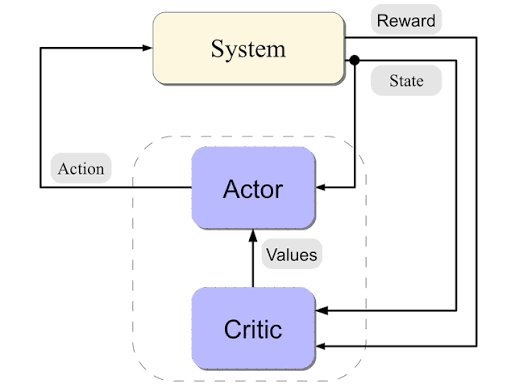
Doesn't this remind us of actor-critic architecture?
One part of the model tracks the state; the other handles the action.
I wonder if this will enable e.g. easy+cheap PPO implementation.
This is a really well-written, easy-to-read paper!
It's my favourite kind of paper: we had a simple intuitive insight, we found a way to implement it, and it gives us multiplicative gains!
Very well done to the authors 😊